|
...and don't forget to email your
questions or comments! |
CONTINUING our interview (Click here to return to previous page) Part 7: How can you taste so many wines in a day and not lose perspective? APJ: Let’s move on to another question. You say you might taste a hundred wines in a day. How the heck do you do it? HS: We don’t do that every day. In the office, we try to taste 6 or 7 wines at the end of the day. Especially on Friday, when a lot of our employees are at the office. APJ: That sounds like fun! HS: Yes, well, the culture here is very laid back. We’re a young company and we love what we do. So we’re popping bottles every day — but it’s strictly for tasting! A hundred wines in a day is a rare thing. But when you’re traveling to France or Italy, you have a lot of decisions to make in a short period of time. You’ve got 4 to 10 days in each country. APJ: So how do you keep your perspective when you’re doing that? Any tips? HS: It’s kind of an acquired thing. Up to a point, it can actually help to be tasting so many wines. There are a lot of comparisons you can make in your mind. But sometimes it’s extremely difficult, particularly when you’re tasting young, hard vintages. I remember tasting ‘93 red Burgundies out of the barrel. After visiting a couple of cellars, your gums are just shot. You just cannot taste another thing. And when that happens, you simply have to stop working. APJ: So it depends on the vintage? HS: Yes, vintages with high acidity are just very hard to taste young. Like 1993 Burgundy. And '96 Burgundy is the same way. Part 8: The direct shipping controversy. Where do you stand? APJ: The direct shipping controversy. How do you feel about it — and how is it affecting your relationships with the cult wineries who depend on their mailing lists? HS: It doesn’t really affect our relationship. You know, I think people assume that wholesalers are all of one mind and all against direct shipping. A lot of people assume that we fall into that camp. But we don’t. And one of the reasons we have such a good relationship with our small, family-run suppliers is that we support their right to ship directly. We know that it’s part of their business. Some of these wineries make only 500 cases a year. If they didn’t have direct shipping, they wouldn’t be able to do what they do. On the other hand, it’s a very sticky issue. Because our customers — especially our retail customers — feel they’re being bypassed by direct shipping. So it’s a difficult issue that we have to deal with all the time. APJ: How would you solve it if you were king? HS: I think a good answer might be to permit it for small, family-run wineries. Because they’re the ones who need it to survive. APJ: So if that were allowed, why would they bother with you at all? HS: Restaurants, for one thing. From the very beginning, we’ve always strived to be the importer and wholesaler who appeals to New York restaurants. We’ve been able to build good relationships with many of these restaurants. That lets us to place wines on the wine lists of the best restaurants in town. And the cult wineries who ship to their mailing lists still want to be on these wine lists. I can understand why some of the big wholesalers see it as a threat. If someday all wine were available direct to anyone, at the click of a button on the Internet — bypassing the importers and wholesalers entirely — then the whole system would be threatened. But I don’t see it going that far. APJ: Actually, I don’t either. I don’t think direct distribution is as efficient a channel for wine as a lot of people think it is. For small producers of very high-end wines, yes. But for lower-priced stuff, the shipping costs alone would kill you. HS: Exactly. Once you get to a certain size, it becomes an inefficient way to distribute your wines. Part 9: Skurnik goes national with Terry Theise. How? APJ: Let’s talk about how you guys are growing. You recently struck an exclusive agreement to distribute Terry Theise’s selections all over America. Personally, I’m impressed, because I love what Terry’s been doing for German and Austrian wine — and now Champagne. But how did it come about? And how are you handling it? Your customer relationships are mostly in New Jersey and New York, right? And now you’ve got this national account... HS: Here’s how it happened. We’ve been representing Terry locally for the last 6 years or so. And we’ve been very successful in marketing the Terry Theise name and his fabulous selections. In fact, I’d venture to say we’ve been way more successful than the rest of the country. APJ: What was your secret? HS: Terry! He’s a salt-of-the-earth kind of guy in my books. And he and Michael and I just hit it off from day one. He’s young, he’s into rock and roll like we are, he’s loose, he’s irreverent — you read his catalog and that’s him. So we saw a fabulous marketing opportunity waiting to happen. As you implied earlier, German wines have been unbearably tough for people to figure out. But we saw we could market Terry Theise the man. And tell people to look for his name on the back label. And that worked. We sold thousands and thousands of cases of his wine in our local market alone. APJ: Okay. But it’s a big move from local to national. What made you guys and Terry think it could work? HS: His previous national importer was a big, liquor-based outfit. Milton Kronheim. Not really a fine wine company. And they were just doing the paperwork. Terry was pretty much his own one-man-show. He did the actual sales to retailers around the country. APJ: So he was doing all the legwork, anyway. HS: Oh, yeah. He was writing all those catalogs, doing all the sales, going around and pressing the flesh. Doing all the work. One guy. And think about it. I mean — you ask how could we do it, but imagine one man doing it all. How could he possibly take full advantage of his fantastic portfolio? Over the years, we talked about this. We told Terry, hey, we could bring a lot more to the party. If you align yourself with some fine wine people, you can really take it to another level. APJ: When did he finally say yes? HS: It was last year that he decided to leave Kronheim and join us. And we then had the daunting task of doing all the registrations and documents — all the things that had to be done to sell in 50 states. It was really a daunting task to get things up and running. But we went out and hired some great people. We’ve dedicated some people full time to the Terry Theise portfolio. And we couldn’t be happier with the way things are going. Part 10: A Revolution in Champagne APJ: What’s new and exciting in the Terry Theise portfolio? HS: He’s most famous for the German wines, of course. But the Austrian wines are starting to find a market, particularly in restaurants, because the wines are mainly dry, as opposed to German wines, which tend to be sweet. APJ: And the Champagnes? HS: It’s just explosive... APJ: To coin a phrase! Sorry, go on... HS: Well, Terry only got into the Champagnes two years ago. But interest is already huge. You might say it’s because we’re heading into the millennium, but I think there’s more going on... APJ: I think I first tasted his Champagnes two years ago. And I was knocked out... HS: The exciting thing about it is that we’re asking people to recognize small growers. In a category that’s dominated by big corporations. You know, outfits like Moet-Hennessy-Louis Vuitton are selling the grand marques. And there’s an analogy here to what Burgundy used to be. APJ: I never thought about it that way, but you’re right... HS: Yeah, think about it. In the 1970s, Burgundy was dominated by negociants. Drouhin. Bouchard. In the ‘60s and ‘70s, small growers sold all their wines to the big negociants. That was their only market. And it’s been the same in Champagne, up until recently. You only sell to the big marques. Let them blend giant vats of Champagne and make a very consistent product. But now, in Burgundy, it’s small growers who get all the great ratings. It’s small growers that the collectors are clamoring for. There’s a market for small, family-run operations, whose wines reflect their particular site. And why can’t that happen to Champagne? Certainly , in Terry’s portfolio, each Champagne is very different. Each reflects the terroir of its particular region. And the character of that particular winemaker. And the varieties of grapes grown in that particular vineyard. It’s exactly what we look for in all the other wines we cover. And to top it all off, Terry’s Champagnes are being sold at lower prices than the grand marques. That’s pretty rare these days... APJ Gotta love that! But are they really better than the grand marques? HS: You could argue either way. But certainly, they’re more distinctive and more reflective of their terroir. And finally, people are really responding to it. APJ Was there resistance at first? HS: Two years ago, you couldn’t talk to people about grower Champagnes. People would ask us, "But how am I going to sell it?" And we’d say, "Why is this category any different from Puligny-Montrachet or Clos de la Roche? You’ve got all these different growers there. You’re happy with that. So why sell only Moet and Bollinger?" We’ve really been pushing that and it’s really exploded this year. The millennium hasn’t hurt. But I think we’ve really created a category here. APJ: So where can our readers get these Champagnes? HS: They’re pretty widely available all over the country. There’s big market for them in New York, Chicago. A huge market for them in both Northern and Southern California. APJ: And if my retailer doesn’t carry them? HS: Tell them to call our office. [NOTE: See the end of this interview for how to inquire about Skurnik wines, and where to get them.] APJ: Which ones do you like the best? I know that’s like asking a father what kid he likes the best... HS: Well, yes, we appreciate the nuances of each. But I’ll say the portfolio mainly focuses on Blanc de Blanc producers. You might want to try Pierre Gimmonet — he produces absolutely stunning wines and in fact he just came out with a special release of older vintages. Back to ‘73. APJ: What’s his village? HS: Cuis. In the Blanc de Blanc area. You might also try Larmandier-Bernier in Vertus. Or Pierre Peters in Mesnil. Those are just three... Part 11: Which wine-growing areas offer the best value today? APJ: Let me ask you now, where in the world are the values today? HS: Certainly not California! The prices of California wines have just gone haywire. In fact, as California prices rise, there are so many European areas that look more and more like incredible values. And some aren’t all that brand new. In France, I’d head south for red wine. In the Southern Rhone, you can still get excellent estate-bottled Cotes du Rhone for under fifteen bucks. We represent Clos du Mont Olivet, for example. He makes Chateauneuf du Pape and he makes a Cotes du Rhone for under $15 that’s just fantastic. Of course, Languedoc-Roussillon is getting a lot of press lately. They still have a long way to go and you have to be selective, but there are some producers making stunning wines. Domaine de L’Aigueliere, for example. Or white wines from the Loire. Sancerres, Muscadets, Vouvrays. The prices haven’t gone up in years. Or red again, if you like Cabernet Franc — you’ve got some really good Chinons and Bourgeuils from certain producers. APJ: Who in particular for the Loire reds? HS: For Chinons, try Olga Raffault. Now, the Loire is a northerly climate, so you don’t have great vintages every year. But now you have vintages like 1996 and ‘97 where the wines just got super-ripe and they’re great values. We also sell a lot of Sancerre Rouge from Domaine Vacheron. He makes fabulous white and red both. But he actually makes more red than he makes white. It’s made from Pinot Noir and it’s delicious. APJ: What about Alsace? HS: I think it’s undervalued as a category. Okay, maybe not Zind-Humbrecht, where the quality’s great but the prices are insane. But we represent a winery called Paul Blanck... APJ: I’ve tasted his stuff. Really good... HS: Terrifically crafted wines. And very well priced. APJ: Good turkey wines, too. HS: What do you like with Turkey, Gewurz? APJ: Yes, I think it goes well. HS: We sell thousands of cases of his wines. Gewurztraminer, Riesling, Pinot Blanc. All very well priced. Under $20. And the Pinot Blanc is what, $10.99? APJ: Where else should I look for value? HS: Italy. Brunello di Montalcino, Barolo or Barbaresco are not exactly cheap, but they’re truly great wines for a lot less than some of these cult Cabernets are going for. And there are lesser-known regions throughout Italy that give good value... APJ: For example? HS: In Tuscany, a region called Morellino di Scansano. The wines are 100% Sangiovese. Like a baby Brunello for ten bucks a bottle. Or Chianti! Chianti is completely undervalued area. The Wine Spectator just came out with a big article about the 1997 Chianti vintage being great, which it is. And so is ‘95. But Chianti Classico still suffers from the image of the straw flask. And Chianti Classico from a great producer is a great buy. From Montegrossi or Palazzino or Le Cinciole. APJ: What about Spain? HS: Spain is getting a lot of attention as the next great region for value, and I can’t disagree. Our portfolio isn’t all that focused right now on Spain’s best value areas. But that may change. We do have a terrific portfolio of the top Spanish producers in the established areas. Like Ribera del Duero and Rioja. And nobody can touch our portfolio from Priorat. APJ: What should I look for from Priorat? HS: This isn’t a value region, but Alvaro Palacios is leading the region. He’s making incredible, Pomerol-like wines. APJ: What varieties is he using? HS: Mainly Garnacha, Cabernet and Merlot. Also look for Clos Mogador. And Clos Martinet. And the new one that’s getting a lot of press is Cims de Porrera. There’s a revolution going on in Priorat. At the turn of the century, it was a huge wine-growing region — and basically, all the vineyards were pulled out. And Palacios and others went there and restored the region. Three other producers were involved too. Palacios got the most press because he rediscovered the old vineyard of L’Ermita. But this wine goes for about $300 a bottle at auction. Not cheap! APJ: What about Ribera del Duero? HS: Well, Vega Sicilia of course. We represent that wine and it’s the most legendary estate. But Mauro is really coming along now. It’s owned and run by the previous winemaker of Vega Sicilia, Mariano Garcia. He got fired from Vega Sicilia, because he was involved in this other estate. So now he’s full time on it. Mauro is an estate to watch. The wines are just incredible, especially the 1996. And the prices are nowhere near Vega Sicilia. Part 12: Who are the hot new California producers? APJ: One last topic. California may not be value-land, but it’s certainly hot! Who’s new and exciting? HS: One is Dashe cellars. Michael Dashe used to be one of the winemakers at Ridge. His Zins are amazing. APJ: Where is he operating? HS: Currently he’s using the same Alameda facility that Rosenblum uses. It’s near San Francisco. APJ: What about Cab? HS: Jones Family vineyard is the hot new Cabernet for now. And there a couple of others. Emilio’s Terrace and Long Meadow Ranch... APJ: Long Meadow Ranch. Is that the one up on Mt. St. Helena that Cathy Corison is involved with? HS: Yes, she makes the wine and helped design the winery too. And she makes her own wines there as well. The owner’s name is Ted Hall. Stunning property. APJ: What’s the story about Emilio’s Terrace? HS: It’s owned by Phil Schlein. A New York executive originally. He moved out many years ago and I believe he used to sell the fruit from this vineyard. He hired Joe Carafo, who’s an excellent winemaker. Joe makes wine for his own Cafaro label and Oakville Ranch as well. And now he’s making this. The first vintage for Emilio’s Terrace is 1996 and it’s terrific. APJ: Anyone else? HS: Karl Lawrence. APJ: Thanks. I think that’s a wrap and I’ll let you go now. Thank you so much Harmon! REFERENCE SECTION I:
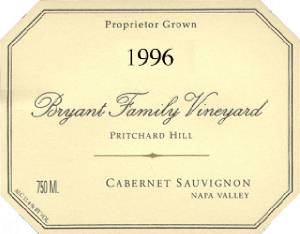
If you want to have a bottle of Turley or Bryant tonight... First of all, please understand that Michael Skurnik Wines is strictly a wholesale operation and doesn’t sell wines to individual consumers. That being said, there’s still a way to get your heart’s desire. Make reservations at one of the restaurants they supply, have a great meal and order your wine off the list. Sure, you may pay more this way than you would if you had the good fortune to be at the top of a cult winery mailing list. But you may wind up paying less than you would at an auction. And, of course, you’ll have a memorable dining experience. Following is a partial list of the restaurants supplied by the Skurniks. Obviously, if you’re after a specific wine with your meal, you should verify ahead that it’s on the list. So you may want to speak with the sommelier when making your ressies. Alternately, you can click here to email Harmon Skurnik directly. Tell him the wine you’re looking for and he’ll recommend restaurants that carry it. Restaurants that carry Michael Skurnik Wines 21 Club 21 West 52nd Street New York NY 212-265-1900 Aureole 34 East 61st Street New York NY 212-319-1660 Ben Benson’s 123 West 52nd Street New York NY 212-581-8888 Bernards Inn 27 Mine Brook Road Bernardsville NJ 908-766-0002 Bouley Bakery 120 West Broadway New York NY 212-964-2525 Box Tree 250 East 49th Street New York NY 212-758-8320 Cafe Boulud 20 East 76th Street New York NY 212-772-1800 Chanterelle 2 Harrison Street New York NY 212-966-6065 Crabtree’s Kittle House 11 Kittle Road Chappaqua NY 914-666-8044 Doris & Ed’s 348 Shore Drive Highlands NJ 732-872-1565 Four Seasons 99 East 52nd Street New York NY 212-754-9468 Frog & The Peach 29 Dennis Street New Brunswick NJ 732-846-3216 Gotham Bar & Grill 12 East 12th Street New York NY 212-620-8176 Gramercy Tavern 42 East 20th Street New York NY 212-477-1025 Harry’s of Hanover Sq 1 Hanover Square New York NY 212-425-3412 Hudson River Club 90 West Street New York NY 212-786-1500 Jean Georges 1 Central Park West New York NY 212-299-3900 Le Bernardin 155 West 51st Street New York NY 212-489-1515 Le Cirque 455 Madison Avenue New York NY 212-303-7788 Lobster Club 24 East 80th Street New York NY 212-249-6500 March 405 East 58th Street New York NY 212-754-6272 Mercer Kitchen 147 Mercer Street New York NY 212-966-5454 Michael’s 24 West 55th Street New York NY 212-767-0555 Mirabelle 404 North Country Road St. James NY 516-584-5999 Montrachet 239 West Broadway New York NY 212-219-2998 Oceana 55 East 54th Street New York NY 212-759-5941 Patroon 160 East 46th Street New York NY 212-883-7373 Picholine 35 West 64th Street New York NY 212-724-8585 Restaurant Daniel 60 East 65th Street New York NY 212-288-0033 Russian Tea Room 150 West 57th Street New York NY 212-265-0947 Ryland Inn Box 284, Route 22 West Whitehouse NJ 908-534-4011 Savoy 70 Prince Street New York NY 212-219-8570 Spark’s Steak 210 East 46th Street New York NY 212-687-4855 Lespinasse 2 East 55th Street New York NY 212-753-4500 Stage Left 5 Livingston Avenue New Brunswick NJ 732-828-4444 Tribeca Grill 375 Greenwich Street New York NY 212-941-3910 Union Square Cafe 19-21 E. 16th Street New York NY 212-989-3510 Verbena 54 Irving Place New York NY 212-260-5454 Veritas 43 East 20th Street New York NY 212-353-3700 Xaviar’s 506 Piermont Avenue Piermont NY 914-359-7007 Zoe 90 Prince Street New York NY 212-966-0644
REFERENCE SECTION II: CALIFORNIA, OREGON OR WASHINGTON: Bryant, Araujo, Marcassin, Turley, Martinelli, Peter Michael, Etude, Selene, Talbott, Bonny Doon, Barnett, Rabbit Ridge, Corison, Cafaro, Staglin Family, von Strasser, Karl Lawrence, Jones Family, Mueller, Emilio’s Terrace, Long Meadow Ranch, Edmunds St. John, Lava Cap, Green & Red, Rockland, Paul Hobbs, Hendry, Domaine Serene, Cristom, Woodward Canyon. FRANCE: Burgundy: Groffier, Anne Gros, Engel, Sauzet, Mongeard-Mugneret, Ponsot, Gouges, Frederic Magnien, Maurice Ecard, Dauvissat, Boyer-Martenot. Other French wines: Beaucastel, Clos du Mt Olivet, Clape, Graillot, Blanck, Egly-Ouriet (Champagne), Weinbach, Bourillons-Dorleans (Vouvray), Durdilly (Beaujolais), Mas de Gourgonnier (Provence), L’Aiguilliere (Montpeyroux, Languedoc), Peyre Rose ITALY (Note that 98% of these are Marc de Grazia Selections): Piedmont: Altare, Scavino, Sandrone, Clerico, Moccagatta, La Spinetta, A. Rocca, Seghesio, Manzone, Corino Brunello: Ciacci Piccolomini, Pertimali (Livio Sassetti), Siro Pacenti, Mocali, Uccelliera, Gorelli, Enzo Tiezzi Chianti: Palazzino, Montegrossi, San Giusto, Le Cinciole Other Tuscan: Dei (Vino Nobile), Filomusi Guelfi (Montepulciano d’Abruzzo), I Botri (Morellino di Scansano) Friuli: Vie di Romans, Polencic Veneto: Gini (Soave) SPAIN: Ribera del Duero: Vega Sicilia, Alion, Mauro, Hacienda Monasterio Rioja: La Rioja Alta, Baron de Ona Priorat: Alvaro Palacios, Cims de Porrera, Clos Mogador, Clos Martinet Sherry: Emilio Lustau GERMANY: Muller-Catoir, Lingenfelder, Selbach-Oster, Donnhoff, Willi Schaefer, Merkelbach, Kurt Darting, JJ Christoffel AUSTRIA: Nigl, Brundlmayer, Hirsch, Nikolaihof TERRY THEISE’S PORTFOLIO OF ESTATE-BOTTLED GROWER CHAMPAGNE: Gimmonet, Pierre Peters, Fleury, Margaine, Gaston Chiquet, Billiot, Chartogne-Taillet, Larmandier-Bernier, Geoffroy. VINTAGE PORT: Quinta do Vesuvio For more information about Michael Skurnik fine wines, click here to email Harmon Skurnik. Back to beginning of interview Back to interviews contents page
|